
Grain Whisky: Labels, Flavours & Serving
Cook along on the interactive map
Grain whisky: understand the label and explore the flavour
Grain whisky can be an intriguing choice when you want to look beyond a familiar malt or bourbon. The name alone does not tell you the country, exact grains or flavour of every bottle. Start with the label and producer's information, then use the glass to discover what that particular expression offers. Grain character, distillation and maturation all contribute to the result.
Find out what the bottle actually describes
The grain whiskey guide explains why origin and production details matter. Look for the stated category, distillery, cask information and tasting description instead of assuming one uniform style. Words such as vanilla, cereal or fruit can offer a useful starting point, but the individual bottle may take the flavour in another direction.
For a more specific example, explore Irish single grain whiskey. Single refers to one distillery, not necessarily a single grain. Knowing that distinction helps you read the label with more confidence and avoids confusing a production term with a complete ingredient list.
Explore texture as well as aroma
Use a clean glass and notice the aromas gently before a small sip. Think about cereal notes, fruit, spice and wood, but also whether the texture feels light or rounded. Your own description is more useful than trying to match every word in a tasting note. If you add water, do so gradually and compare the change. Ice introduces cooling and ongoing dilution, creating a different way to experience the same bottle.
Compare styles with a clear starting point
The whisky and whiskey overview connects grain whisky with Scotch, Irish and American styles. It is useful when you want to understand where a bottle sits within the wider family. For a classic cocktail comparison, the linked Old Fashioned uses bourbon, syrup, bitters and orange peel. Follow that recipe as written; a grain whisky substitution would be a separate variation with its own balance.
Store and serve with care
Keep the bottle upright, securely closed and away from direct light and heat. For serving, choose a glass and temperature that help you enjoy the individual expression. A simple accompaniment leaves space for its aromas, while strongly seasoned food can change what you notice. There is no need for an elaborate setup to make a useful comparison.
Questions about grain whisky
Does grain whisky come from one country?
No. Check the origin and stated category of the bottle.
Does single grain mean one grain?
No. Single identifies one distillery in this context.
Will every bottle be light and sweet?
No. Production and maturation can produce a wider range of aromas and textures.
Best Grain Whiskey Recipes to Try at Home
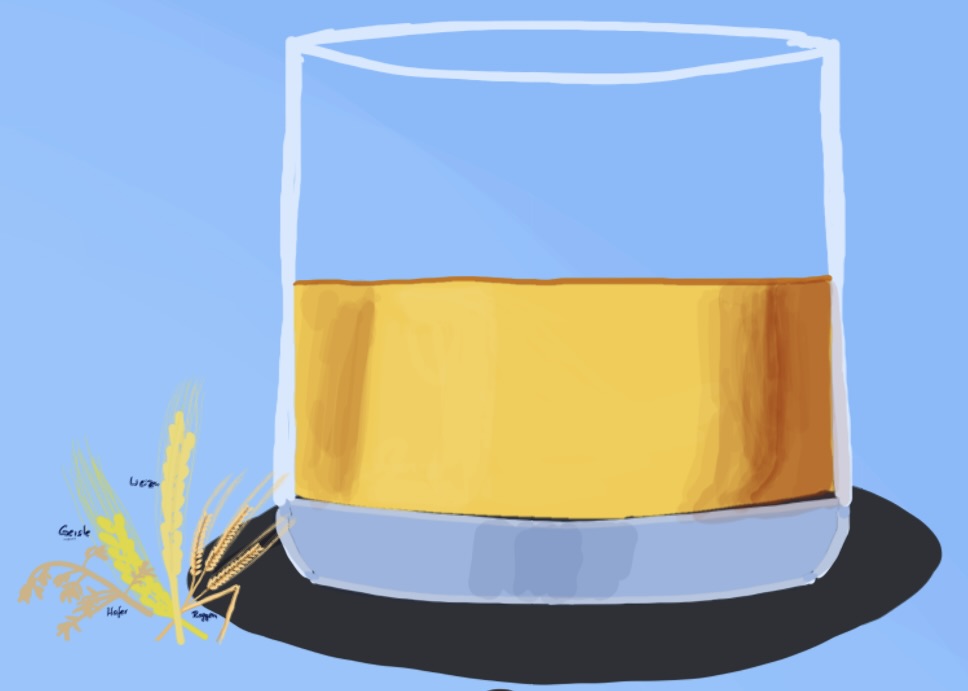
Grain Whiskey
Explore Grain Whiskey without assuming one origin or style. Learn what the label can tell you, how to taste it, and when optional water may suit your pour.