
Glazed Popcorn | Buttery Sugar Cream Coating & Crunch
Directions 👩🍳
Tap the map & cook step-by-step
Sweet Glazed Popcorn: crisp, glossy, and coated in a rich sugar-cream-butter glaze
Popcorn with a sugar-cream-butter glaze is the indulgent version of sweet popcorn: richer, shinier, and more candy-like, with a proper caramel-style coating that wraps every piece in buttery sweetness. Unlike simple butter-and-sugar popcorn, this version depends on timing, heat control, and moisture management. Get the glaze right and you end up with caramel popcorn that is crisp instead of sticky, deeply flavorful instead of burnt, and perfect for movie nights, party bowls, gifting, or festive snack boards.
Why caramel popcorn works so well
- Real caramel flavor: Butter, sugar, and cream create a deeper, more rounded sweetness than plain sugared popcorn.
- Glossy crunch: The glaze forms a thin shell that makes the popcorn feel crisp and snackable.
- Big treat energy: It tastes more special and dessert-like than standard sweet popcorn.
- Easy to customize: Add salt, vanilla, cinnamon, nuts, or chocolate once you master the base.
- Great for sharing: It works beautifully for parties, movie nights, and edible gifts.
High-value tips: How to make caramel popcorn really good
- Keep the popcorn dry: Fresh popcorn should be fully popped and lightly aired out before glazing. Trapped steam can turn the final result soft instead of crisp.
- Use gentle, controlled heat: Sugar burns fast. Let the butter, sugar, and cream melt and bubble steadily, not aggressively, so the glaze turns golden and aromatic instead of bitter.
- Do not stir too late: Stir at the beginning to dissolve everything evenly, but once the caramel develops, too much stirring can make the texture grainy.
- Watch the color, not just the clock: The glaze should turn a warm golden caramel shade. Too pale tastes flat and overly sweet; too dark tastes burnt.
- Moisture control is critical: Too much cream or undercooked glaze leads to sticky popcorn. The glaze should feel fluid, but slightly thickened and able to coat the popcorn instead of soaking it.
- Coat quickly and evenly: Pour the glaze over warm popcorn in stages and toss immediately so you do not end up with a few heavy clusters and lots of plain popcorn.
- Use the oven if needed: A short, low bake after coating helps dry and set the glaze, especially if you want extra crunch and longer shelf life.
- Salt sharpens everything: A small pinch of salt keeps the caramel flavor balanced and prevents it from tasting one-note sweet.
Variations & alternatives
- Classic caramel popcorn: Just the sugar-cream-butter glaze plus a little salt for balance.
- Salted caramel: Increase the salt slightly for a stronger sweet-salty contrast.
- Vanilla caramel: Add a small amount of vanilla after cooking the glaze for a softer dessert note.
- Cinnamon caramel: Stir cinnamon into the finished glaze for a warmer, cozy version.
- With nuts: Add roasted peanuts, pecans, or almonds for extra crunch and a snack-mix feel.
- Chocolate finish: Once fully cool, drizzle with melted chocolate for a more candy-like result.
Serving ideas / pairings
- Movie-night bowl: Serve in a large bowl once the glaze has set and the popcorn feels crisp.
- Party snack: Portion into cups, paper cones, or jars for easy sharing.
- Gift-style treat: Pack into bags or tins once fully cooled and dry.
- Snack board: Pair with pretzels, nuts, chocolate pieces, or cookies.
- Festive version: Add cinnamon, nuts, or chocolate drizzle for holidays or cozy weekends.
Storage, meal-prep & reheating
Caramel popcorn should cool completely before storing so the glaze can set properly. Keep it in an airtight container at room temperature, where it usually stays best for 2–4 days depending on humidity. If it softens, a short time in a low oven can help restore some crunch. Avoid refrigerating it, because moisture in the fridge often makes the glaze sticky. For make-ahead use, bake the coated popcorn briefly to dry the glaze more thoroughly before storing.
FAQ
Why did my caramel popcorn turn sticky instead of crisp?
The glaze was likely undercooked, too wet, or the popcorn trapped too much steam. Cook the glaze a little longer and let the popcorn dry slightly before coating.
Why does my caramel taste burnt?
The heat was too high or the glaze cooked too long. Use steady medium heat and stop when the color is golden, not dark brown.
Why is the coating grainy?
Too much stirring late in the caramel process or undissolved sugar can cause graininess. Dissolve early, then stir less once the glaze starts caramelizing.
Do I need to bake caramel popcorn after coating?
Not always, but a short low bake helps dry the glaze, improve crunch, and make the popcorn store better.
How do I make the coating spread more evenly?
Pour the glaze over the popcorn in stages and toss immediately in a very large bowl so every batch gets coated before the caramel sets.
Best Popcorn Recipes to Try at Home
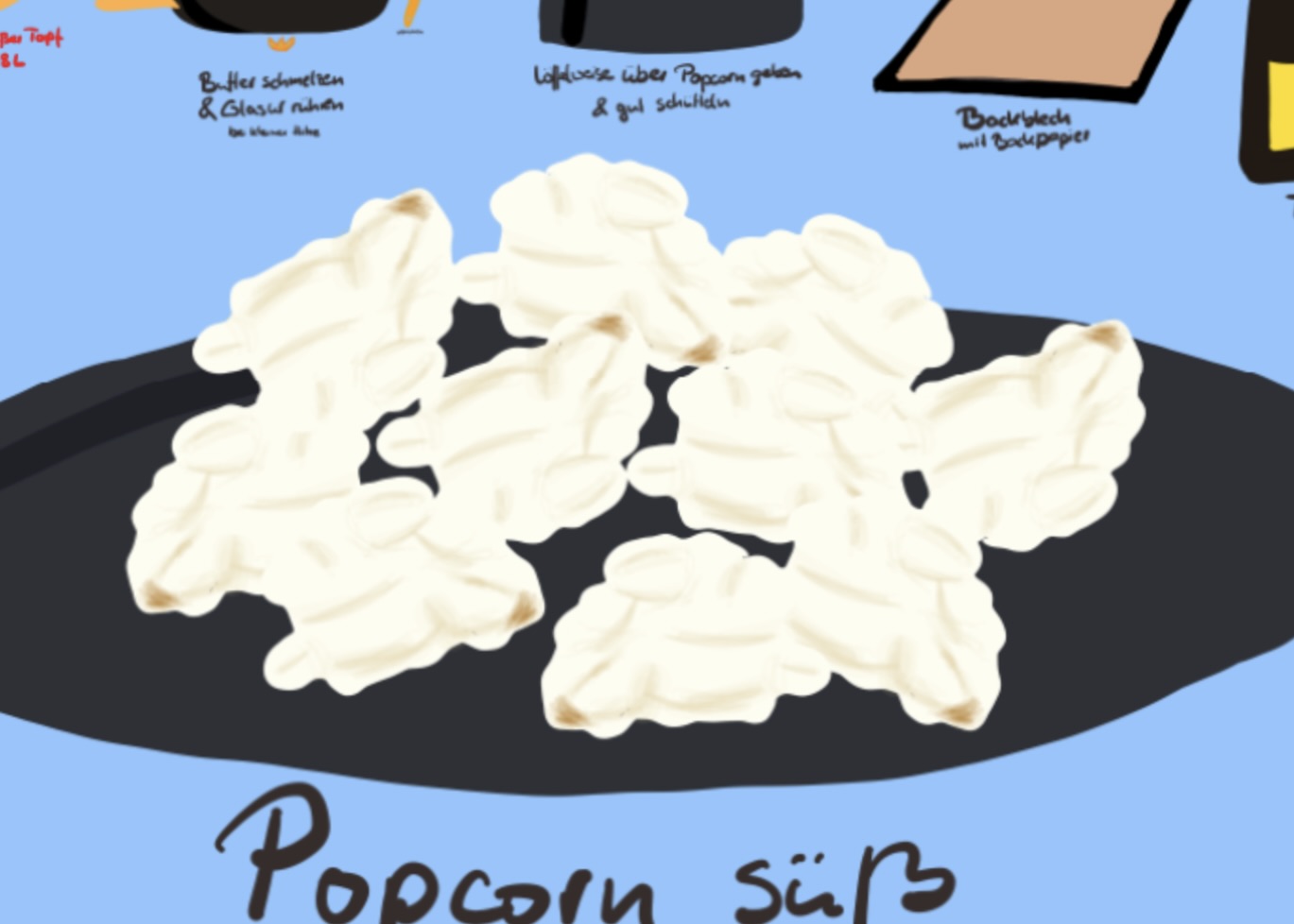
Sweet Popcorn
Sweet popcorn with melted butter and sugar: quick, buttery, crunchy, and perfect for movie night. Includes tips for coating, texture, and serving fresh.

Caramel Popcorn
Classic caramel popcorn with deep caramel flavor and crisp texture. Learn how to coat evenly, avoid stickiness, and keep every batch beautifully crunchy.